NEPAL: Product and Services of Microfinance
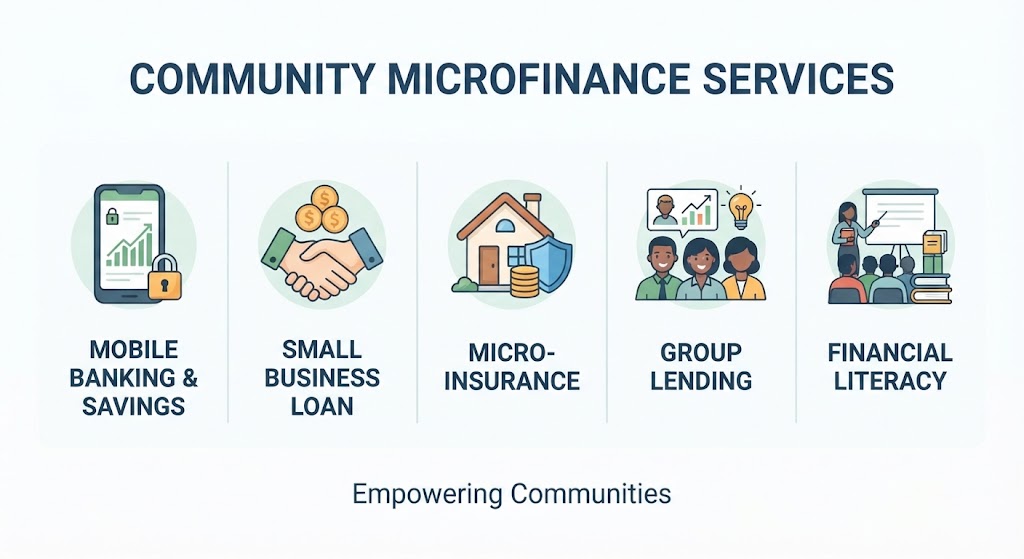
Nature of Microfinance Products and Services
Microfinance products and services are specifically tailored for low income individuals and unbanked communities lacking access to traditional banking. They provide essential capital, security, and Transaction tools through small scale offerings, flexible repayment terms and alternatives collateral structures like peer group guarantees.
Microfinance products and services refer to a range of financial and nonfinancial services designed primarily for low income individuals, poor households, micro entrepreneurs and small businesses that have limited access to formal banking institution. These products are characterized by affordability, accessibility, flexibility and a focus on poverty reduction and financial inclusion.
Nature of Microfinance Products and services:
- Small-scale Financial services: Microfinance products are offered in small amounts to match the financial needs and repayment capacity of low income clients.
- Client Oriented: Products and services are designed according to the needs, occupations, income patterns of poor and underserved people.
- Financial inclusion: Microfinance aims to provide financial services to individuals who are excluded from the formal financial system due to lack of collateral, low income.
- Collateral Free or Alternative Security: Most microfinance loans do not require traditional collateral. Instead, they rely on group guarantees, joint liability, social trust.
- Income Improvement: Credit is mainly provided for productive purposes such as agriculture, livestock, handicrafts, retails business.
- Flexible loan: Loan amounts, repayment schedules and loan duration are flexible and suited to borrower's income cycle and cash flows.
- Simple and Easy procedures: Documentation, application, approval and disbursement procedures are simple, making services accessible even to people with limited education.
- Group based and individual lending: This institution provides both group lending such as Self-help groups and joint liability groups. and to individual lending.
- Risk Protection: Microfinance includes products such as micro insurance, emergency loans, and pension schemes to protect clients against financial risks.
- Non financial support: MFIs provide financial literacy, Entrepreneurship Training, skills development, etc.
Types of Microfinance Products and services:
- Micro Loans: Microcredit refers to small loans provided to low income individuals, micro-entrepreneurs, farmers and self employed people who have limited access of banking services. These loans help borrowers to established small businesses, purchase agricultural machineries, meet emergency needs, and undertake other income generating activities. Micro loan is generally provided without traditional collateral and often relies on group guarantees or social collateral.
Benefits are:
- Promotes self employment
- increase employment opportunities
- Contribute on reducing poverty rate
- Give financial direction to entrepreneur
- Small loans gives for businesses
2. Micro Savings: Micro savings are small deposit accounts where customer saves on daily basis in small amounts for future use. It helps households build financial security, manage emergencies and saved funds for future Investments.
Benefits are:
- Encourage a regular saving habit.
- These savings will helps on emergency rather than takes loans
- It gives financial security
- Monthly savings account also provided
- Daily savings collected by microfinance itself.
3. Micro insurance: Micro insurance provides affordable insurance coverage to low-income household against risks such as illness, accidents, death, crop failure, livestock loss and natural disasters.
Benefits are:
- Health insurance
- life insurance
- crop insurance
- livestock insurance
- accident insurance
- property insurance
4. Micro Pension: Micro pension schemes are retirement savings programs designed for low income workers and people in the informal sector. Members contribute small amounts regularly during their working years and receive pension benefits after retirement.
Benefits are:
- Provides financial security in old age
- ensures a regular source of retirement income.
- encourage long term savings
- reduces dependence on family members
- improve the quality of life after retirement
Examples:
- Monthly contribution by customer or self employed then after the retirement age microfinance provide the amount as pension.
- retirement savings plan for farmers
- government supported micro pension programs
5. Payments and money transfer services: It enable individuals to send, receive, and make payments safely, quickly and conveniently. these services are particularly useful for migrant workers, rural householder and small businesses.
Services are:
- Domestic money transfer
- international remittance services
- mobile wallet
- salary payments
Benefits are:
- It helps to do quick money transfer
- reduces transaction costs and travel time
- promotes digital and financial inclusion
Comments (0)
No comments yet. Be the first to comment!